
Is the house taking longer to cool down?
The earliest sign is usually performance, not noise. Rooms that used to reach the set temperature by dinner now get there late, or never quite do. The system runs, air comes out, but it feels a step behind the day.
Watch it for a few days if the weather just turned hotter and everything else seems normal. A short heat spike can make a healthy system look weak for an afternoon.
Act now if the gap keeps growing week over week. That pattern points to airflow loss, dirty coils or low charge — the cause ladder behind a system that runs but stops cooling properly — and it does not reverse on its own.
How cool should the air from the vents feel?
Supply air should feel clearly cold, typically around 15 to 20 degrees cooler than the air returning to the system. Air that feels merely cool, or close to room temperature, is a sign worth having diagnosed rather than waited out.
Can a dirty filter explain weak cooling on its own?
Yes — it is the first thing to check, because a loaded filter strangles airflow and mimics bigger faults. Replace it, give the system a day, and if cooling is still falling behind, the cause is deeper and needs a pro's gauges.
New noises you did not hear last summer
A healthy system has a familiar sound: a soft start, a steady hum, air moving. Trouble adds new instruments. Buzzing can point at electrical parts, rattling at loose panels or failing mounts, screeching at bearings, and clicking that repeats at a faulty contactor or control.
Watch a single soft rattle that appears once and disappears — then mention it at the next visit. Panels shift, and not every sound is a failing part.
Act now on grinding, loud buzzing, repeated clicking at start-up, or any noise paired with weaker cooling. The sound-by-sound breakdown on the noises page will help you describe exactly what you hear when you call.
Short runs, long runs, and runs that never end
Cycle behaviour tells a story. A system that starts, runs three minutes, stops, and starts again ten minutes later is short cycling — hard on the compressor, poor at removing humidity, and a sign of anything from a failing capacitor to an airflow or charge fault.
Read the pattern properly on the guide to the on-off cycling loop, because the order a pro checks those causes in matters. Guessing wastes money on parts that were never the problem.
At the other extreme, a system that never stops and never catches up is also reporting a fault. Act now on either pattern lasting more than a day or two in normal summer weather.
Bills climbing while comfort stays the same
Pull up last summer's bills and compare similar months. A system losing efficiency works longer for the same result, so the kilowatt-hours creep up before the house ever feels different. Rates change too, so compare usage, not just dollars.
Watch a single mild increase that matches a hotter month. Summer in the Schertz-Cibolo-Universal City ISD area is not getting cooler, and a brutal August honestly costs more than a mild one.
Act now if usage jumps sharply with no weather explanation, or rises month after month. Something — charge, coils, duct leakage, a struggling motor — is making the system pay more for the same cooling.
How much of a bill increase counts as a warning?
Treat a jump of roughly a fifth or more in usage against a similar-weather month as worth investigating, especially alongside any other sign on this list. One sign can be weather. A bill spike plus weak airflow is a pattern, and patterns are what pros diagnose.
Could the problem be the house, not the AC?
Sometimes — failed attic insulation, leaky ducts or a new heat load can mimic system decline. A good diagnostic checks the system first, but be ready for an honest answer that part of the problem lives outside the equipment itself.
Water, ice, and smells around the unit
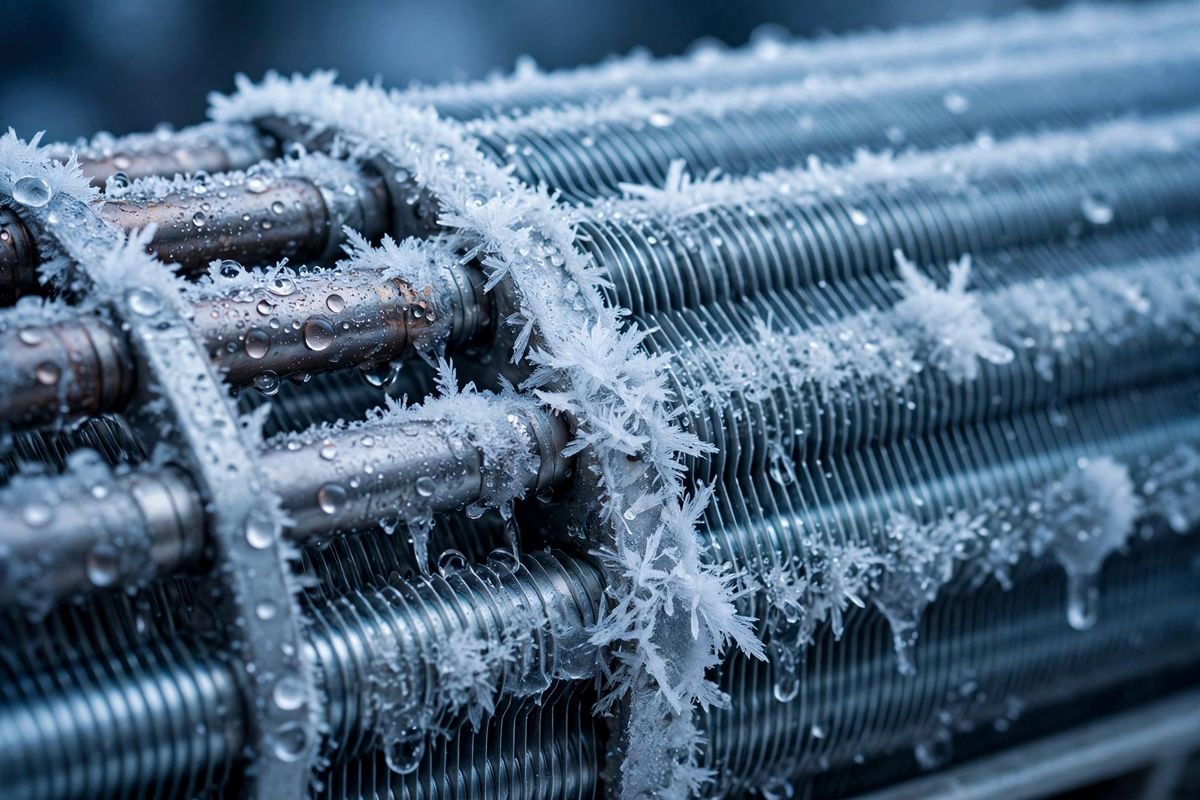
Physical evidence beats guesswork. Water pooling near the indoor unit means the condensate drain is struggling. Ice on the refrigerant line or the indoor coil means airflow or charge trouble — and running the system 'to push through' makes icing worse.
Watch a few drops of condensation on a humid day; that is the system doing its job. The line is crossed when water collects, drips where it never did, or a stain starts on the ceiling below.
Any new burning or electrical smell belongs in act-now territory too. Switch the system off and treat it as the priority call of the day, not a weekend project.
When the pattern says repair, or replace?
One sign on an eight-year-old system usually means a repair. Several signs at once on a system past twelve, especially with a major part in the quote, changes the conversation — that is when homeowners run the age-and-cost math on the repair-or-replace guide before approving anything.
The rules of thumb there, like the 5,000 rule, keep the decision honest. A pro you're matched with should be willing to price both paths and let the numbers argue.
Whatever you decide, decide before the total failure. Comparing typical repair costs in this area while the house is still cool is a much better negotiation position than approving a quote in a hot kitchen.
More from the blog
Cibolo Summer AC Guide
One Cibolo air conditioner has to survive about 122 days a year at 90°F or…
Read the guide →New Home AC Checklist
Moving into a new Cibolo home in Steele Creek, Turning Stone, Legendary Trails or a…
Read the guide →AC Smells
Your nose is a decent early-warning system for AC trouble. A musty smell usually means…
Read the guide →Questions homeowners ask
How much warning does an AC usually give before it fails completely?
Often two to six weeks of soft signs — weaker cooling, new sounds, longer runs — before a stressed part finally gives up in peak heat. The catch is that the final failure tends to land on the hottest stretch of the year, because that is when weak parts work hardest. Acting on the early pattern is what keeps you out of that week.
My AC is noisy but still cooling fine. Can it wait?
Sometimes, briefly. A mild new rattle with normal cooling can be watched for a few days and raised at a regular visit. Grinding, screeching, loud buzzing or clicking paired with any performance change should not wait. Those sounds often come from parts that damage more expensive components when they fail completely, like motors and compressors.
What is the most commonly ignored warning sign?
Short cycling. Because the house still gets roughly cool, many homeowners live with a system switching on and off every few minutes for a whole season. Meanwhile each start is the hardest moment in a compressor's life, humidity control suffers, and the underlying fault — often electrical or airflow related — quietly gets worse.
Should I keep running a system that is icing up?
No. Switch it to fan-only or off and let the ice melt fully. Running a frozen system starves the coil of airflow, strains the compressor, and can flood the area when the ice finally lets go. Ice is a symptom of airflow restriction or low charge, and both need a diagnosis, not more run time.
At what age do these warning signs start meaning 'replace'?
Age alone does not decide it, but signs carry more weight past about twelve years, and many Cibolo builder-grade systems hit their first major failures at eight to twelve years. When an older system shows several signs and the repair is a major part, run the replacement math before spending — the guide linked above walks through it with local price ranges.
Related pages
Need a Cibolo AC pro?
Spotted two or more of these signs this week? Call BreezeCrew on (830) 555-0147 and describe them — you'll be matched with a local pro who can diagnose the system while it is still running.
Call (830) 555-0147