
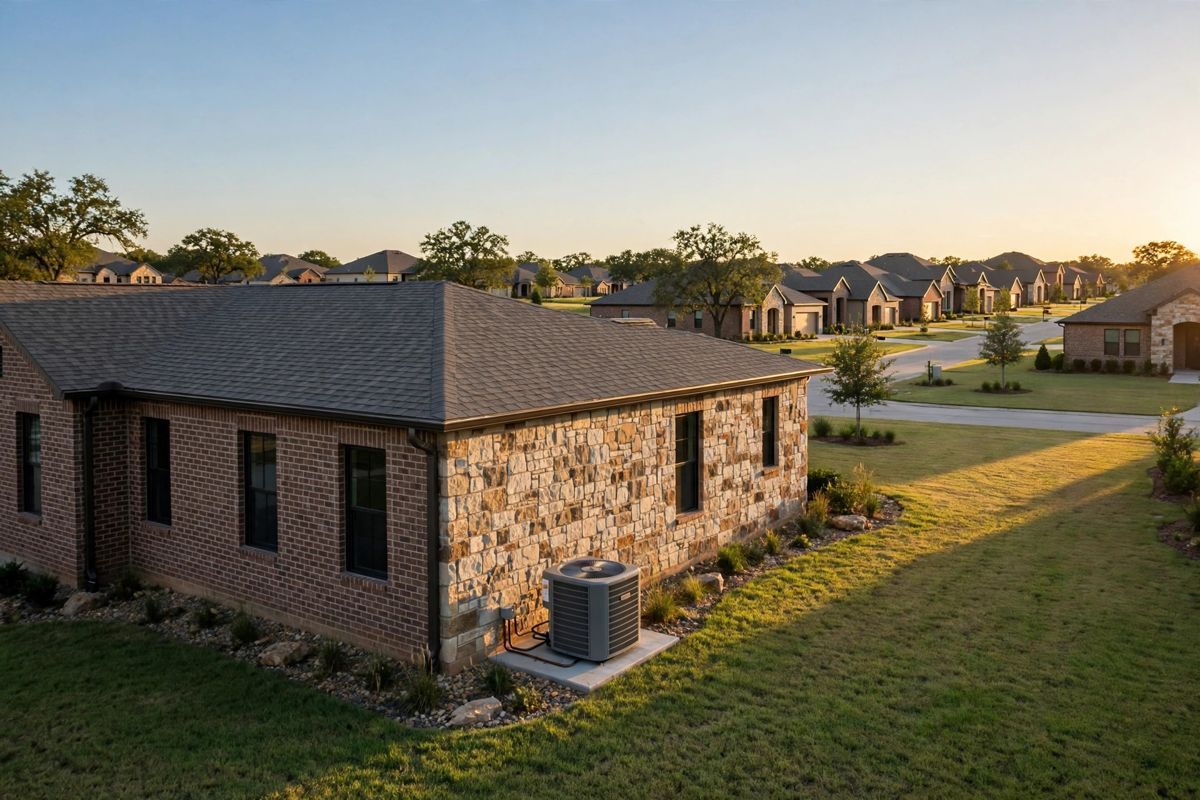
Why Cibolo heat turns breakdowns into emergencies
The numbers explain the urgency. This area averages about 122 days a year at or above 90°F and roughly 20 days at or above 100°F, with a cooling season that runs May through September. A failed system in that stretch is not competing with mild weather.
A closed house in full Texas sun gains heat steadily through the afternoon and holds it into the night. Indoor temperatures can pass the high 80s within hours of a failure and keep climbing, and upper floors in two-storey homes in Turning Stone or Steele Creek heat fastest.
Heat risk is not evenly shared. Infants, older adults, people with heart or breathing conditions, and pets left indoors feel it first and cope with it worst. Check on elderly neighbours living alone, too.
What counts as urgent, and what can wait till morning
Urgent means people or property are at risk now: no cooling at all during extreme heat with vulnerable people home, burning or electrical smells, a breaker that trips instantly, sparking, or water pouring through a ceiling from the indoor unit.
Also urgent: a system that ices solid and floods, refrigerant hissing loudly, or any failure during a heat-advisory stretch when indoor temperatures are already in the high 80s and rising despite fans, shade, and hydration.
Can usually wait for a prompt morning visit: weak cooling that still holds the house in the 70s, a new minor noise with normal cooling, or a single warm room.
If everyone can sleep comfortably and safely tonight, it is a fast booking rather than an emergency — but still this week, not next. The weak-cooling guide helps you judge which side of the line a fading system sits on.
Is a warm house at night less dangerous than in the day?
Somewhat, but Texas nights in a heat wave stay warm, and a house that soaked up heat all day radiates it back through the evening. If bedrooms cannot get below the mid-80s, sleep and health suffer, especially for older adults. Judge by the indoor temperature, not the clock.
My AC works a little. Is it wrong to call it urgent?
No. Partial cooling that is losing ground hour by hour during extreme heat is a developing emergency, and saying so on the call helps the match. Pros would rather arrive while a system still runs than after a straining compressor fails completely at midnight.
First steps while help is being matched
First, run the quick checks that fix a surprising share of emergencies. Thermostat set to cool with a sensible target and fresh batteries if it needs them. Breaker checked once — and left alone if it trips again. Filter pulled and replaced if it is matted.
Second, look for ice. If the lines or coil are frozen, switch the system off completely rather than letting it strain, because a frozen compressor can be damaged by continued running. The frozen-system guide explains the thaw, but in an emergency the key act is simply: cooling off, people first.
Third, cool the people, not the house. Close blinds on sun-facing windows, run ceiling fans in occupied rooms, move everyone to the lowest, shadiest room, and hydrate steadily. A cool shower helps more than a heroic thermostat setting on a dead system.
Fourth, decide early about leaving. If indoor temperatures push into the 90s with vulnerable people home, a few hours at a library, a neighbour's house, or any air-conditioned public place beats waiting it out. Pets come with you or go to a cool home — never leave them in a heating house or a car.
What happens when you call in an emergency
BreezeCrew connects Cibolo homeowners with independent local AC professionals. On an emergency call, the details that matter are who is home, how hot the house is, what the system is doing — silent, humming, tripping the breaker, blowing warm — and whether there are smells, ice, or water involved.
That triage shapes the match and the visit. A pro heading to a capacitor-style failure carries different expectations than one heading to a flooded attic unit. Honest symptoms, reported plainly, are what make the first visit count instead of becoming a second trip.
Expect the visit itself to follow the standard discipline even at speed: confirm the fault with measurements, explain it in plain language, and give a written price range before repair work starts. Emergency pace never has to mean pressure. The full range of services a matched pro can handle is listed on the services hub.
What should I have ready when I call?
The system type if you know it, its rough age, what it is doing now, when it last cooled normally, and who is home and how they are coping with the heat. The outdoor unit's data plate gives the model and refrigerant type in one glance.
Can the pro fix it on the same visit?
The common emergency faults — capacitors, contactors, drain clogs, control issues — are usually single-visit repairs because the parts are standard truck stock. Compressors and coils can need ordering. You will be told which situation you are in after diagnosis, with the range in writing either way.
What emergency repairs typically cost
The diagnostic visit commonly runs $75–$150 in this market, and emergency timing does not change the underlying repair ladder. Most breakdowns that feel catastrophic resolve as single parts inside the common $150–$650 range once tested.
The usual emergency suspects price plainly: a capacitor at $150–$400, a contactor at $150–$350, a blower motor at $300–$700. A recharge completed as part of a proper leak repair usually runs $200–$600 when low charge is what finally stopped the system.
The honest ceiling cases are coil work at $900–$2,500 and compressor work at $1,200–$2,500, against full replacement at $5,000–$12,000 or more for context. Even at midnight, you are entitled to the diagnosis and the range before deciding. The local cost guide lays the ladder out in full, and warm-air faults get their own cause list.
After the emergency: keeping it from repeating
Most emergencies have a quiet prequel: weeks of weaker cooling, a new noise, a breaker trip that seemed like a one-off, or a system that started starting and stopping too often. Once cooling is restored, ask what the early warning was — that detail is worth more than the repair itself.
A pre-summer tune-up each year is the structural answer in this climate. Capacitors, contactors, drains, and coils get checked in mild weather, when a weak part is a small planned repair instead of a 100°F failure.
Keep the paperwork from the emergency visit: what failed, what was fitted, what charge was set. Patterns across visits are how slow leaks and tired compressors get spotted early.
Questions homeowners ask
How hot is too hot to wait for a morning appointment?
Watch people, not just the thermostat. If indoor temperatures are in the high 80s and still rising, or bedrooms cannot cool below the mid-80s at night, vulnerable household members — infants, older adults, anyone with heart or breathing conditions, and pets — should not wait it out at home. Move to a cooler place and treat the call as urgent. A house in the 70s with working fans and healthy adults can usually wait safely.
What should I do if the breaker keeps tripping?
Reset it once. If it trips again immediately or within minutes, stop: repeated tripping means the system is drawing fault current, and forcing it risks wiring and compressor damage. Switch the thermostat off, leave the breaker as it is, and report the tripping pattern on the call. It is valuable diagnostic information — capacitor, compressor, and wiring faults each trip breakers in recognisably different ways.
Can I hose down the outdoor unit or mist it to help it along?
A gentle rinse of a dirty condenser coil with the power off is normal maintenance, but misting a running, failing system does not fix any fault on the emergency list and can mask overheating symptoms a pro needs to see. In a true no-cooling emergency, your time is better spent on the thermostat, breaker, filter, and ice checks, and on cooling the people in the house.
The house is hotter upstairs. Where should everyone sleep?
Downstairs, in the room with the least sun exposure, with fans moving air across sleepers. Heat stratifies, and in Cibolo's two-storey homes the upstairs can run several degrees hotter than the ground floor through the night. If the downstairs cannot stay in the 80s or below for vulnerable sleepers, sleeping elsewhere for the night is the safer call, not an overreaction.
Does emergency timing mean I have to accept the first quote?
No. Urgency changes scheduling, not your rights as a buyer. You should still receive a measured diagnosis and a written price range before repair work begins, and you can still decline a top-rung repair — compressor work at $1,200–$2,500, for instance — and ask about replacement ranges instead. BreezeCrew's role is the match; the decision stays with you and the independent pro you are matched with.
Related pages
Need a Cibolo AC pro?
No cooling, a heating-up house, and people at risk in Cibolo tonight? Call (830) 555-0147 now and BreezeCrew will match you with a local pro who handles urgent calls.
Call (830) 555-0147