
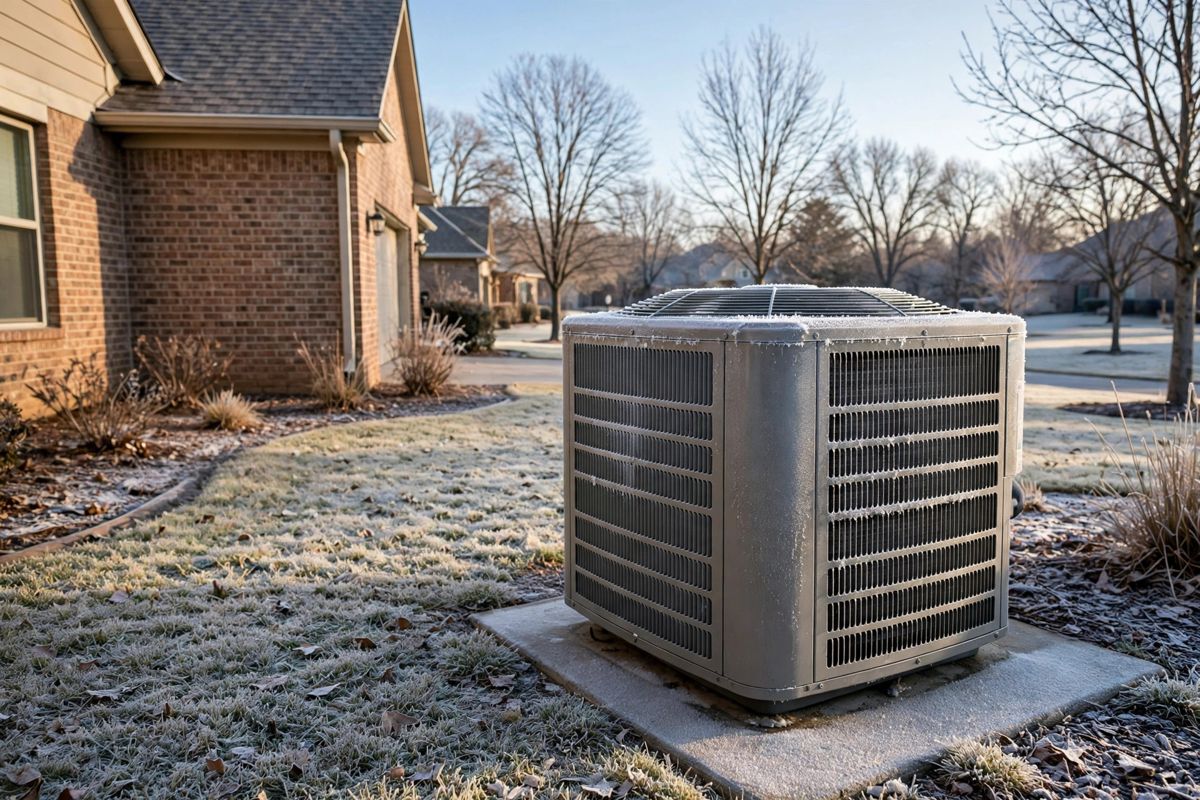
An honest starting point: heat pumps here
Heat pumps are a minority of Cibolo homes. Most houses in the area run a central air conditioner paired with a gas furnace, and that setup dominates the older subdivisions.
Where heat pumps are growing is in newer, efficient builds — homes in developments like Cibolo Vista and the newer phases along FM 1103, where builders fit one electric system for both seasons.
That minority status matters for repairs. Not every AC pro works on heat pumps regularly, and the faults are different enough that experience counts. This service matches heat pump owners with pros who actually service them.
How a heat pump fault differs from an AC fault
A heat pump is an air conditioner that can run backwards. In summer it moves heat out of the house; in winter a reversing valve flips the flow and it pulls heat in from outdoor air.
That valve, the defrost board, and the auxiliary heat strips have no equivalent in a standard AC-and-furnace home. When one of them fails, the symptoms confuse owners used to conventional systems.
A system that cools fine but heats poorly, or heats but leans on auxiliary strips constantly, is telling a heat-pump-specific story. The HVAC system types page explains the mechanics in plain language if you want the background first.
Cooling-season heat pump problems
In cooling mode, a heat pump suffers the same faults as any AC: failing capacitors, worn contactors, low refrigerant charge, and dirty coils. Cibolo's roughly 122 days at 90°F or above work these systems as hard as any conventional unit.
The shared faults share prices, too. Capacitors run $150–$400, contactors $150–$350, and a full refrigerant recharge $200–$600 — though low charge means a leak, and topping off without finding it is money spent twice.
If the house is warm and the unit runs without cooling, the AC not cooling ladder applies in summer mode. Tell the pro it is a heat pump when you call, so the right parts come on the truck.
Why is my heat pump icing up in winter?
Some frost is normal; the defrost cycle melts it periodically, often with a puff of steam. Thick ice that never clears points to a defrost board, sensor, or refrigerant problem. Switch to emergency heat if the house is cooling down and book a visit — running a fully iced unit strains the compressor.
What does a stuck reversing valve feel like?
The classic sign is a system that heats when set to cool, or cools when set to heat — or one that does a weak version of both. It can also show as a hiss or clunk at the outdoor unit when the season changes. A reversing valve is a definite pro job, not a setting to fiddle with.
Heating-season faults: defrost and aux heat
Cibolo winters are mild — about 1,438 heating degree days — but roughly 14 nights a year drop to freezing or below, and that is when heat pump weaknesses surface. February 2021 remains the local lesson in what happens when backup heat fails during real cold.
Auxiliary heat strips should stage in only when the pump cannot keep up, then stage back out. Strips stuck on are the single most common cause of a winter power-bill shock in heat pump homes.
Defrost faults run the other way: the outdoor unit ices over, output falls, and the house slowly cools. Both faults need a pro who reads heat pump controls, which is the entire point of matching by system type through HVAC services.
What heat pump repair costs in Cibolo
Most heat pump repairs use the same parts shelf as conventional AC work, so the ranges are familiar: common jobs $150–$650, with larger work like coil replacement at $900–$2,500 and compressors at $1,200–$2,500.
Diagnostics follow the market pattern — some companies advertise dispatch as low as $25, while $75–$150 is the common full-diagnostic range. You get a written range after diagnosis, before approving work.
The full breakdown lives on the AC repair cost page. Heat-pump-specific components like reversing valves are quoted after inspection, because access and refrigerant handling drive the labour.
| Job | Typical range | Notes |
|---|---|---|
| Diagnostic visit | $75–$150 | Common full-diagnostic range in this market |
| Capacitor replacement | $150–$400 | Frequent cause of a unit that will not start |
| Contactor replacement | $150–$350 | Buzzing or a silent outdoor unit can point here |
| Refrigerant recharge | $200–$600 | Only after the leak is found and fixed |
| Coil repair or replacement | $900–$2,500 | Depends on coil size and refrigerant type |
Repair it, or start over with a new system?
Heat pumps work year-round, so they accumulate run-hours faster than a cooling-only system in the same house. A 12-year-old heat pump in Cibolo has lived a harder life than a 12-year-old AC that rests all winter.
The usual heuristics still guide the call: the 5,000 rule (age times repair cost) and the guide that a repair above roughly 30% of new-system cost deserves a replacement quote alongside it.
If replacement wins, heat pump installation covers how modern systems handle Cibolo cold better than older ones did. The repair or replace AC guide walks the math for either path.
Why does my heat pump run almost constantly in winter?
Long run times are normal for heat pumps in cold weather — they work steadily rather than in hot blasts. The warning sign is different: auxiliary heat engaged for hours, or a house that still loses temperature while the system runs. That points to low charge, a defrost fault, or strips staging wrongly.
Can any AC pro repair my heat pump?
Many can, but heat pumps add a reversing valve, defrost controls, and auxiliary heat staging that a cooling-only pro may rarely touch. Cibolo's heat pump homes are a minority, so experience varies. This service matches you with a pro who services heat pumps regularly — ask about that experience on the call.
Getting matched with a heat pump pro
BreezeCrew connects homeowners with independent local pros; it does not repair systems itself. For heat pumps, the match matters more than usual, because the fault list is specialised.
When you call, mention the system is a heat pump, whether the problem shows in heating or cooling mode, and whether auxiliary or emergency heat is currently keeping the house comfortable.
If low refrigerant is suspected, remember refrigerant work legally requires an EPA 608 certified technician — another reason the match goes to a pro equipped for the job, including refrigerant leak repair when a leak is the real fault.
Questions homeowners ask
Why does my heat pump blow lukewarm air in heating mode?
Heat pumps deliver air around 85–95°F at the vent — warmer than the room, but cooler than body temperature, so it feels lukewarm even when working correctly. The real fault signs are a house that keeps losing temperature, auxiliary heat running for hours, or ice that never clears from the outdoor unit. If those are present, book a diagnosis rather than judging by vent feel alone.
What is auxiliary heat, and why is my bill so high?
Auxiliary heat is a set of electric strips inside the air handler that back up the heat pump in cold weather. They cost several times more to run than the pump itself. Brief use on the coldest nights is normal; strips running daily in mild weather mean a fault — a struggling outdoor unit, wrong thermostat settings, or staging controls that need a pro's attention.
How long should a heat pump last in Cibolo?
Heat pumps here work both seasons, so they log more run-hours than a cooling-only system. With about 3,148 cooling degree days plus winter duty, a well-maintained unit commonly gives strong service into its early teens before major parts start failing in sequence. Regular filter changes and keeping the outdoor coil clean are the simplest life-extenders an owner controls.
My outdoor unit steams in winter. Is it smoking?
Almost certainly not — that is the defrost cycle. The system briefly reverses to melt frost off the outdoor coil, and the melting ice produces visible steam, often with a whoosh and a pause in indoor heat while auxiliary strips cover. It should happen occasionally on cold, damp mornings and finish within minutes. Constant defrosting, or a unit that stays iced, is a fault worth reporting.
Is it worth repairing a heat pump that uses older refrigerant?
It depends on the repair. Electrical parts like capacitors and contactors are refrigerant-independent and usually worth fixing. A compressor or coil failure on an older-refrigerant system is harder to justify, because refrigerant costs climb as supplies shrink — R-22 runs $90–$250 per pound. Ask the pro to price the repair and a modern replacement side by side, in writing, before deciding.
Related pages
Need a Cibolo AC pro?
Heat pump acting up in either season? Call (830) 555-0147 and say it is a heat pump up front — you will be matched with a local pro who services them, with a written range before any work begins.
Call (830) 555-0147