
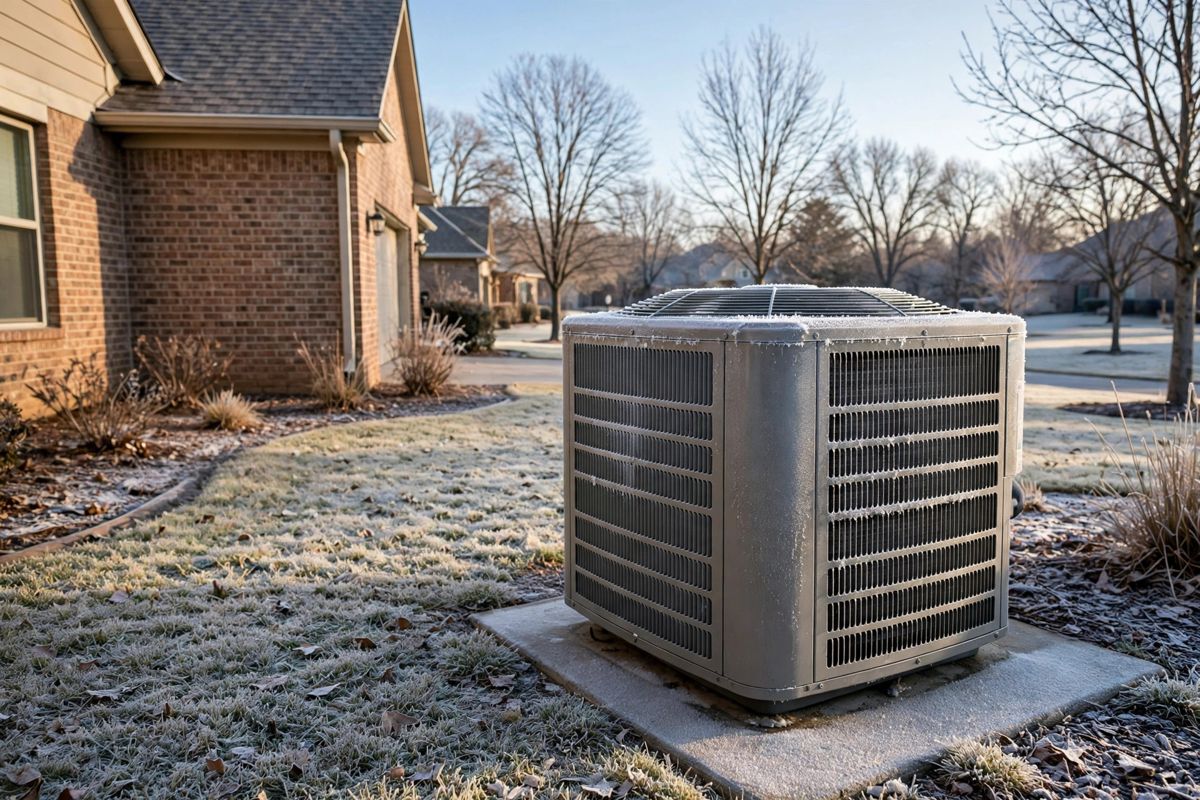
Why heat pumps fit Cibolo's climate math
Start with the load. This area logs about 3,148 cooling degree days a year against roughly 1,438 heating — a cooling-to-heating ratio of about 2.2 to 1. Any system chosen here is a cooling system first.
Heat pumps cool exactly like a standard air conditioner, so nothing is sacrificed on the side of the year that matters most: the roughly 122 days at 90°F or above.
On the heating side, Cibolo winters are mostly mild, with about 14 nights a year at or below freezing. A modern heat pump handles those nights with auxiliary heat as backup, rather than struggling the way older generations did. Background on how the system types compare is on the HVAC system types page.
Where heat pumps are going in around Cibolo
Honesty first: heat pumps are still a minority of Cibolo homes. The established subdivisions mostly run central AC with gas furnaces, and plenty of those systems have years of life left.
The growth is in newer, efficient builds — homes in Cibolo Vista, Gatewood, and the newer streets off FM 1103, where builders and buyers choose a single all-electric system and skip the gas line entirely.
Installation enquiries also come from owners of older heat pumps. A household whose 2009 system needs replacing already has the ductwork, the electrical setup, and the habit of heat pump heating — for them, a modern unit is a straightforward upgrade. Owners switching from gas should read the AC installation comparison before deciding.
Sizing a heat pump for both seasons
Heat pump sizing balances two loads. Size only for summer and the system may lean too hard on expensive auxiliary heat in January; size only for winter and it short-cycles all summer, cooling badly and removing little humidity.
In Cibolo the cooling load leads, and a proper load calculation confirms by how much. Variable-speed systems soften the compromise, modulating output instead of running flat-out or not at all.
Auxiliary heat strips are sized as part of the same calculation. They exist for the coldest nights — the February 2021 freeze is the standing reminder of why that backup is not optional here. The pro you're matched with should explain the aux-heat plan in the quote, not leave it to the first cold snap.
Will a heat pump keep my house warm in a freeze?
A correctly installed modern system, yes. The pump handles ordinary cold efficiently, and auxiliary electric strips stage in for the hardest nights. The failure stories usually trace to undersized systems or aux heat that was never wired or tested. Ask the installer to demonstrate aux heat before signing off the job.
Do I need a gas line or gas service for a heat pump?
No. A heat pump is fully electric — that is one reason new builds choose them. Your electrical panel capacity does matter, though, especially with auxiliary heat strips in the plan. The quote visit should include a panel check so any electrical work is priced upfront, not discovered mid-installation.
What a heat pump installation costs
A full heat pump system lands in the same headline range as other full replacements in this area: $5,000–$12,000+. Tonnage, efficiency tier, duct condition, and whether auxiliary heat and electrical work are included move a quote within that range.
Efficiency is rated in SEER2 for cooling, and running costs here are dominated by the cooling season. With 3,148 cooling degree days, a higher-efficiency unit earns its premium back over the system's life more reliably than it would in a mild climate. The SEER rating explained page does that math plainly.
Full replacement pricing drivers are broken down on the AC replacement cost page — the same logic applies, line by line.
| Item | Typical range | Notes |
|---|---|---|
| Full heat pump system | $5,000–$12,000+ | Tonnage, SEER2 tier, and ductwork drive the total |
| Full AC and furnace replacement | $5,000–$12,000+ | The conventional alternative, for comparison |
| Coil replacement on existing system | $900–$2,500 | When only the coil has failed |
| Common pre-install fixes | $150–$650 | Drain, duct, and electrical items found on inspection |
New refrigerant comes with new systems
Systems built from 2025 onward use R-454B refrigerant. It is mildly flammable (classed A2L), so it requires trained handling, compatible components, and leak sensors in the equipment design.
For a buyer, the practical effect is simple: a new heat pump will be an R-454B system, and the installer must be set up to service it. Ask directly — the answer separates current pros from those still working only on older stock.
The R-454B refrigerant page covers what the change means for future repairs and refrigerant costs. Existing R-410A systems are unaffected and keep running on their own refrigerant.
Living with a heat pump after installation
A few habits help a heat pump work well. Set the thermostat and leave it — big setbacks trigger expensive auxiliary heat to recover. Keep the outdoor unit clear of grass and leaves, since it works in both seasons.
Expect different sounds and sensations from a furnace: steadier, cooler-feeling warm air, occasional defrost steam on cold mornings, and longer, gentler run cycles. All normal, all worth hearing about before the first winter rather than during it.
When something does go wrong, heat pump repair is a dedicated service here — matched to pros who know these systems. Start from the full list under HVAC services for anything else.
Is a heat pump cheaper to run than AC plus a gas furnace?
It depends on your rates, but the structure favours it here: one efficient electric system covers a mild heating season, and cooling efficiency matches a comparable AC. The expensive failure mode is auxiliary heat running when it should not. A well-sized, well-set-up system avoids that, which is why installation quality matters as much as the sticker.
Can a heat pump replace my furnace and AC at once?
Yes — that is its design: one outdoor unit and one air handler cover both jobs, using your existing ductwork in most cases. The installation visit confirms duct condition and sizing, electrical capacity, and where the air handler sits. Homes already on a heat pump are the simplest swaps; gas-to-heat-pump conversions add the electrical checks.
Questions homeowners ask
How long does a heat pump installation take?
A replacement in a home already set up for a heat pump usually takes a day. A conversion from gas furnace plus AC can take longer if electrical work or duct changes are involved. The matched pro should give you the schedule with the written quote, including when heating and cooling will be back — worth pinning down if a cold front or heat wave is in the forecast that week.
Are heat pumps a proven choice in Texas, or an experiment?
Proven, and increasingly common in new Texas builds — but still a minority of Cibolo's existing homes, most of which run AC with gas furnaces. The technology suits this climate: cooling performance identical to standard AC, and a heating season mild enough that the pump does most winter work efficiently, with auxiliary strips covering the coldest nights. It is a mainstream choice here now, not a gamble.
What size heat pump does my home need?
Only a load calculation answers that honestly. It weighs square footage, insulation, windows, orientation, and both the cooling and heating loads — Cibolo's cooling load is roughly 2.2 times its heating load, which shapes the choice. Guessing by the old system's tonnage repeats the old system's mistakes. The quote you approve should show the calculation and the auxiliary heat sizing alongside the price range.
What maintenance does a new heat pump need?
The same discipline as any system, doubled in one respect: it works year-round, so filters and the outdoor coil need attention in both seasons. Keep growth and clippings clear of the outdoor unit, change filters on schedule, and book periodic checks so small faults — a weakening capacitor, a drain starting to clog — are caught cheaply instead of during the July peak or a January freeze.
Should I switch from a gas furnace to a heat pump?
It is a genuine option, not an automatic upgrade. The case is strongest when both your AC and furnace are ageing together, when you prefer a single all-electric system, or in a newer efficient home. If your furnace is young and sound, replacing only the AC may be the smarter spend. Ask the pro to price both paths in writing, with running-cost estimates, and decide on the numbers.
Related pages
Need a Cibolo AC pro?
Considering a heat pump for a Cibolo home? Call (830) 555-0147 for a matched local pro who will run the load calculation, explain the auxiliary heat plan, and quote a written range before you commit.
Call (830) 555-0147