
Why do newer homes fail so early?
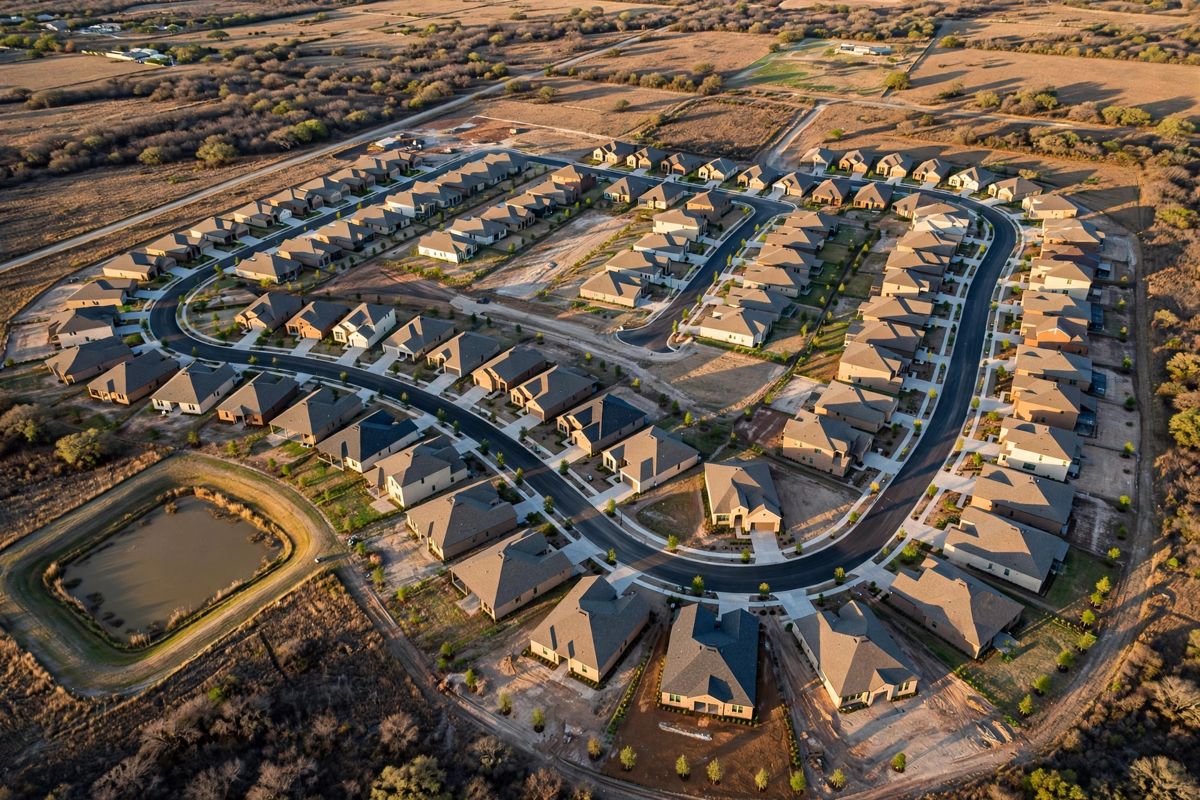
About 74% of homes in ZIP 78108 were built between 2000 and 2019, so most Cibolo systems are now roughly 7 to 25 years old. The biggest group sits right in the window where original equipment starts needing real repairs.
Builders install to a price point and a closing date. The equipment is usually a recognised brand, but it is the entry tier of that brand's range. It cools the house on day one; it was never chosen to be the longest-lasting option on the shelf.
Texas heat does the rest. Around Cibolo there are roughly 122 days a year at or above 90°F, and about 20 days at or above 100°F. A system here runs far more hours each summer than the same unit in a milder state.
What did the builder actually put in?
Start with the outdoor unit. Entry-tier condensers use thinner coils, smaller cabinets, and basic fan motors. They meet the efficiency minimum for their year, with little margin left over. After a decade of heat, that thin margin is usually gone.
Inside, many two-story plans got a single air handler in the attic and one return for the whole house. Long flex-duct runs snake across hot attic space to reach far bedrooms. Every extra foot and tight bend costs airflow.
Attic handlers also sit above a secondary drain pan. That pan is a safety net, not a drainage plan. When the main drain clogs, the pan fills and a float switch may shut the system down. Often the first sign is a ceiling stain, covered in the water leak guide.
| Build pattern | What it means | First symptom |
|---|---|---|
| Entry-tier outdoor unit | Minimum-spec coil and fan parts | Weak cooling on the hottest days |
| Single return, two floors | Upstairs air has a long way back | Hot bedrooms, cool downstairs |
| Long flex-duct runs | Air loses speed and temperature | Far rooms never catch up |
| Attic handler, secondary pan | Drain clogs show up late | Ceiling stain or sudden shutdown |
Which parts quit first, at 8 to 12 years?
The first failures are usually electrical and airflow parts, not the compressor. Capacitors weaken under heat and stop helping motors start. Contactors pit and stick after thousands of summer cycles. Blower motors wear out moving air through restrictive ductwork.
Drain lines are the other early regular. Dust and algae build up in a line that may run the length of the attic. The fix is simple when caught early and messy when ignored. The warm-house cause ladder walks through the same checks a pro uses.
Typical ranges keep these repairs reasonable: a capacitor runs $150–$400, a contactor $150–$350, and a blower motor $300–$700. A pro should confirm the part has failed before quoting any of them. Bigger jobs are priced on the Cibolo repair cost page.
My system is only nine years old. Is that too young to fail?
No. In Cibolo heat, nine summers is a long service record for entry-tier parts. Capacitors and contactors often fail between years eight and twelve here. That is a parts failure, not proof the system is finished.
Should I replace the whole system at the first big fault?
Usually not. If the compressor and coils are sound, a mid-range part can buy several more summers. Replacement makes sense when major parts stack up together, or when the repair math stops adding up.
Why do two-story plans feel it first?
Hot air rises, and a single system fights that all day. The downstairs reaches the thermostat setting and the system shuts off, while upstairs bedrooms are still holding attic heat. One thermostat cannot average two very different floors honestly.
Undersized returns make it worse. If upstairs air cannot get back to the handler easily, supply air slows too. Doors close, pressure builds, and far bedrooms get the weakest flow in the house. The full breakdown sits on the upstairs overheating page.
The system was sized and ducted for a budget and a floor plan, not for a decade of Texas summers. A pro measures temperatures and airflow room by room before recommending a fix.
Where does this pattern show up in Cibolo?
It shows up wherever the 2000s and 2010s building wave landed. Steele Creek, Turning Stone, Falcon Ridge, and Bentwood Ranch all have homes now entering that 8-to-12-year window. Cibolo Valley Ranch, Cibolo Vista, and Gatewood are on the same clock, a few years behind.
Foxbrook, Legendary Trails, and Buffalo Crossing round out the subdivisions where original systems are ageing together. When a whole street was built in one phase, neighbours often hit the same capacitor or drain problems within a couple of summers.
My neighbours all had repairs this summer. Coincidence?
Probably not. Homes built in the same phase usually got the same equipment tier and duct layout. Same age, same heat, same parts reaching the end of their life together is a pattern, not a coincidence.
Does a newer subdivision mean I can skip maintenance?
The opposite. A yearly check catches cheap failures while they are still cheap. Clearing the drain line and testing the capacitor before July is the whole point of a pre-summer tune-up.
Fix it once, patch it, or replace it?
Start with measurement, not parts swapping. A good diagnostic checks temperatures, airflow, refrigerant pressures, and electrical parts under load. That visit separates a small fix from an expensive guess, and it should end with a written range before any work starts.
If faults are stacking up, a blower this year, a coil leak next, run the honest comparison in the repair or replace guide. Rules of thumb like the 5,000 rule exist for exactly this moment.
BreezeCrew connects homeowners with independent local pros who handle the visit and the repair. You approve the range before work begins. If the home might still carry cover, read the warranty explainer before paying out of pocket.
Questions homeowners ask
Are builder grade ac problems covered by any warranty?
Sometimes, but usually not at this age. Builder cover is typically around a year for workmanship, while manufacturer parts cover can run about ten years if the system was registered in time. Most Cibolo homes hitting first failures at eight to twelve years are past both. It still deserves one check before you pay.
What is the most common first repair in these homes?
Two faults lead the list. The capacitor fails after years of heat, leaving the outdoor unit humming or silent. The drain line clogs, fills the secondary pan, and either shuts the system down or stains a ceiling. Both are mid-range repairs when caught early.
Did the builder install a bad brand in my home?
Almost certainly not. The major brands all sell an entry tier built to a price, and that is what most tract homes received. The issue is tier and runtime, not the badge on the cabinet, and the same brand's higher tiers usually last noticeably longer.
Could better maintenance have prevented these failures?
Partly. Yearly checks catch a weakening capacitor, a slow drain, and dirty coils before they strand you in July. Maintenance cannot change the tier of the equipment or the length of the duct runs. Think of it as catching the cheap version of each failure early.
How much should the first major repair on a newer home cost?
For the common first faults, ranges run $150–$400 for a capacitor, $150–$350 for a contactor, and $300–$700 for a blower motor. Most cooling repairs in this market land between $135 and $1,100. A pro should diagnose first, then quote a range in writing.
Related pages
Need a Cibolo AC pro?
If your Cibolo home was built between 2010 and 2022 and the AC is struggling for the first time, call (830) 555-0147. BreezeCrew will match you with a local pro who measures first and quotes a range in writing.
Call (830) 555-0147