
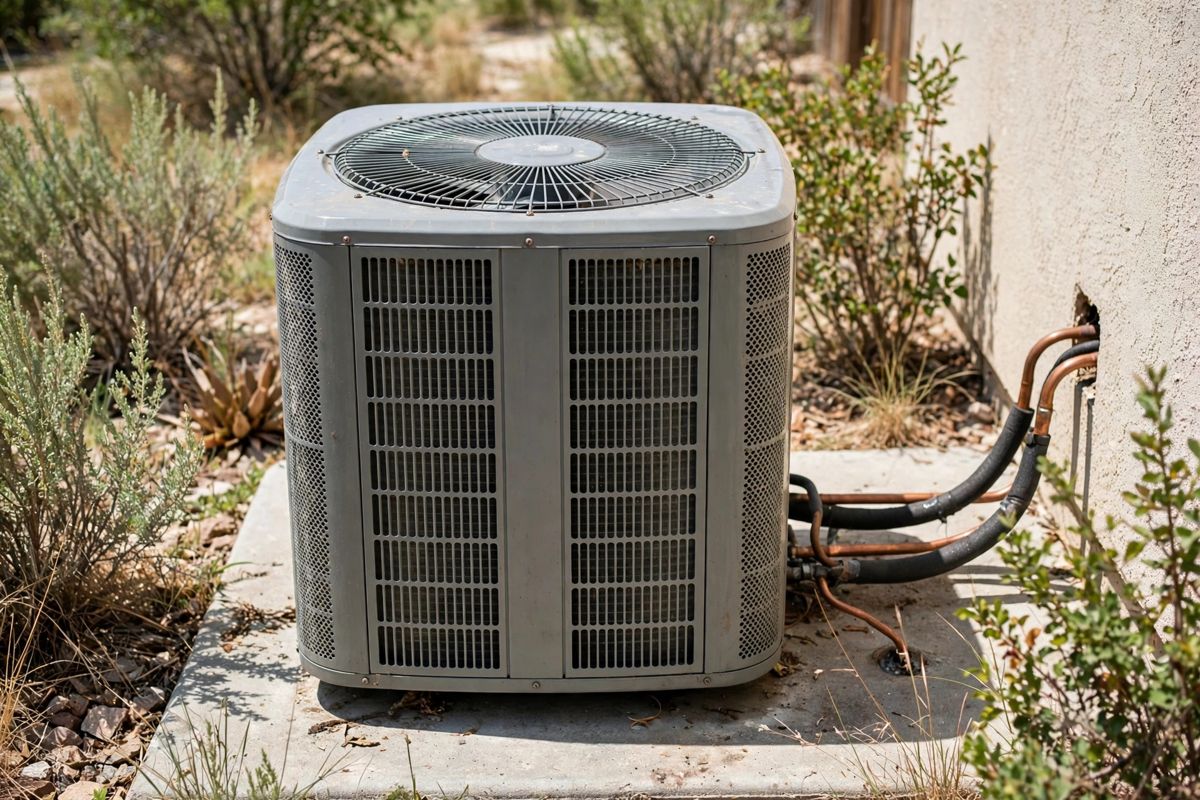
What a healthy system sounds like, for contrast
A sound system has a boring soundtrack: a soft start, a steady fan hum outside, air moving evenly at the vents, and one clean click at the thermostat when the cycle ends. Anything rhythmic, metallic, or new deserves attention.
Note when the sound happens. Start-up noises point at capacitors and contactors. Running noises point at fans, bearings, and airflow. Shutdown noises point at dampers, ducts, and loose panels. Timing is half the diagnosis.
In Cibolo's subdivisions, outdoor units often sit beside bedroom windows along FM 1103 and Cibolo Valley Drive, so new noises announce themselves at night first. Report a sound exactly as you heard it.
Safe checks you can make with your ears and eyes
First, locate the sound: indoor unit, outdoor unit, or the ductwork between them. Stand at each in turn while the system runs. A phone recording, made from a safe distance, is genuinely useful to send ahead of a visit.
Second, check the obvious noisemakers. A rattling return grille, a loose panel screw, or a filter sucked out of position can mimic a mechanical fault. Tighten a grille by hand and reseat the filter before assuming the worst.
Third, look at the outdoor unit without touching moving parts. Debris against the fan grille, a twig in the top, or a pad settled out of level all make noise with cheap fixes. Keep hands and tools out of the fan area.
Fourth, know the stop sounds. Grinding, loud electrical buzzing, repeated hard clicking with burning smells, or a hissing you can hear across the yard all mean switch the system off and skip further checks. The emergency page covers what to do next.
Should I record the noise for the pro?
Yes. A twenty-second recording with a note of when it happens — start-up, steady running, shutdown — saves diagnostic time. Intermittent noises love to vanish during visits, and a recording keeps the evidence available.
The noise stopped on its own. Can I forget it?
Note the date and what the system was doing, then watch it. Bearings and capacitors often announce themselves in episodes before failing outright. A noise that returns, lengthens, or changes character is progressing, and that is the moment to book.
The sound ladder: what each noise usually means
Buzzing usually lives in the electrics: a contactor chattering, a capacitor struggling, or a loose electrical connection. Clicking at start-up is normal once; repeated clicking is a control fault in the start sequence asking for attention.
Screeching and squealing point at moving parts under friction — blower bearings, fan motors, or a slipping component — while grinding is bearings further gone. Grinding is a stop-and-call sound, because a seizing motor can take its electrical supply down with it.
Rattling is often loose metal, duct joints, or debris, and banging or clanking suggests a loose or broken part inside the blower or compressor compartment.
Hissing near lines or the coil suggests refrigerant escaping, which connects to the leak repair sequence rather than a noise fix. A system that also starts and stops in a loop often shares the same electrical suspects.
| Sound | Likely source | Response |
|---|---|---|
| Buzzing | Contactor, capacitor, loose wiring | Book promptly, $150–$400 typical parts |
| Repeated clicking | Control fault, failing contactor | Book promptly, do not ignore |
| Screeching or squealing | Blower or fan bearings | Book soon, friction worsens |
| Grinding | Seizing motor bearings | Switch off and call |
| Rattling | Loose panel, duct, or debris | Check panels, then book if it persists |
| Hissing | Possible refrigerant leak | Book promptly, leak testing needed |
What the pro does with a noise complaint
The visit starts with listening, ideally through a full start-run-stop cycle. Then panels come off and the suspects get isolated: fan motors spun by hand with power off, bearings checked for play, contactor contacts inspected for the pitting that causes chatter.
Electrical testing separates a noisy symptom from a dying part. Capacitor values, amp draws, and voltage at the contactor tell whether a buzzing unit is a $150–$350 contactor, a capacitor, or wiring that needs making safe.
You receive the cause in plain terms and a written range before parts are fitted. BreezeCrew connects Cibolo homeowners with independent local AC professionals, and the services hub lists what else a matched pro can check while the panels are open.
Why does the unit buzz but not start?
Buzzing without starting usually means power is arriving and a motor or compressor is trying and failing to turn — the classic weak-capacitor picture, sometimes with a contactor fault alongside. Continued attempts overheat the part, so it is a switch-off-and-book sound.
Can ductwork really sound like a broken part?
Yes. Undersized or loose ducts pop and rumble with pressure changes, and a closing damper can bang convincingly. Timing gives it away: duct noises follow pressure changes at start and stop, while part noises track the motor.
What noise repairs typically cost
The diagnostic visit commonly runs $75–$150 in this market; some companies advertise lower dispatch fees with less testing included. Panel, grille, and debris fixes often close inside that visit, and many noise repairs land in the common $150–$650 band overall.
The electrical suspects are mid-priced: a contactor at $150–$350 and a capacitor at $150–$400, fitted and tested. Those two parts cover a large share of buzzing and clicking complaints in Cibolo's builder-grade housing stock.
Motor work is the heavier rung: a blower motor typically runs $300–$700. Compressor noises are the ceiling case at $1,200–$2,500, which is why grinding gets a stop-now response. Full ranges are set out on the local cost page.
The noises that should never wait
Grinding, electrical buzzing with a burning smell, loud banging from inside the outdoor unit, and hissing loud enough to hear from several feet away all earn a same-day call with the system switched off. Each describes a fault that damages more parts the longer it runs.
A new noise during a heat wave deserves extra respect. With about 20 days a year at or above 100°F in this area, a motor that seizes on the wrong afternoon turns a noise complaint into a no-cooling emergency.
Quieter sounds — a fresh rattle, an occasional squeal at start-up — can take a booked visit within days. Bearings and capacitors almost never get quieter with time.
Questions homeowners ask
What does a buzzing outdoor unit usually mean?
Buzzing points at the electrical start gear: a contactor whose contacts are worn and chattering, a capacitor losing its ability to start the compressor or fan, or a loose connection. All three are single-part repairs when caught — contactors at $150–$350 and capacitors at $150–$400 — and worsen if left.
Is a screeching sound at start-up serious?
Treat it as a bearing or motor warning. A brief squeal that fades can be an early bearing complaint; a sustained screech is friction doing damage in real time. Blower and fan motors usually run $300–$700 to replace, and catching the sound early often prevents a motor seizing mid-cycle.
Why does my AC click several times before starting?
One click is the contactor pulling in, which is normal. Repeated clicking means the start sequence keeps failing: a weak capacitor, a failing contactor, a control board issue, or low voltage can all produce it. Each retry stresses the compressor.
The vents whistle in one bedroom. Is that the AC failing?
Usually not. Whistling at a single vent points at airflow through a restriction: a partly closed damper, a crushed flex duct, or a vent cover fitted too tightly. Whole-house whistling with weak airflow suggests a clogged filter. Either way it is an airflow story, not a dying compressor.
Can I keep running a noisy AC until the weekend?
It depends on the sound. A light rattle from a panel, yes, for a few days. Grinding, buzzing with any burning smell, banging, or loud hissing, no — switch it off, because those sounds describe active damage. When in doubt, describe the sound on the call to (830) 555-0147.
Related pages
Need a Cibolo AC pro?
New sound from the system at your Cibolo home? Call (830) 555-0147, describe what you hear and when, and BreezeCrew will match you with a local pro.
Call (830) 555-0147