
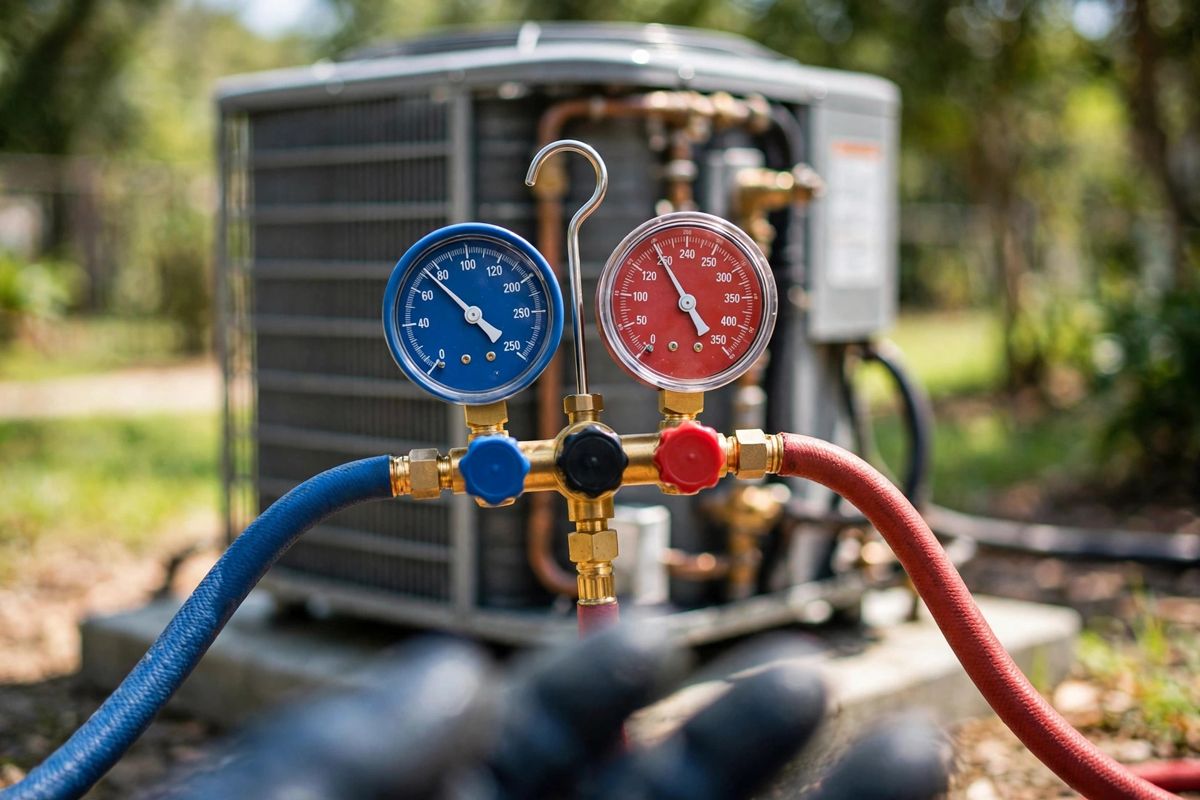
Why the refrigerant is changing at all
R-410A has been the standard refrigerant in home cooling for years. Regulators are phasing it down because of its high global-warming impact when it leaks into the atmosphere.
R-454B was selected as the main successor because it does the same cooling job with a much lower warming impact. Manufacturers redesigned systems around it rather than offering it as a drop-in swap.
The phase-down is gradual, not a ban with a deadline for homeowners. R-410A equipment already installed keeps its refrigerant supply chain for repairs during the transition.
Think of it as a generational change, like the earlier move away from R-22 — except this time the industry planned the overlap instead of leaving owners stranded.
Is R-410A being banned for homeowners?
No. Production and imports are being phased down, which gradually raises cost and scarcity, but owning or repairing an R-410A system is entirely legal. Your system can be serviced for its whole working life.
Can R-454B go into my current system?
No. Refrigerants are not interchangeable. Each system is built and rated for one refrigerant, with matching pressures, oil and safety design. A system built for R-410A runs on R-410A for life.
What A2L and mild flammability actually mean
R-454B carries an A2L classification: low toxicity, with mild flammability. That phrase sounds alarming until it is put in scale — it is hard to ignite and burns slowly if it ever does.
Because of that classification, new systems include leak detection and airflow safeguards, and the refrigerant must be handled by trained, certified professionals. That is a handling rule, not a homeowner hazard warning.
Refrigerant work of any kind already requires EPA 608 certification in the United States. The new refrigerant adds specific training and tools on top of that existing professional floor.
For the homeowner, the practical meaning is simple: choose a pro who is trained on the new systems, the way you would for any sealed-circuit work.
| Refrigerant | Where you find it | What it means now |
|---|---|---|
| R-22 | Systems from before the 2010 changeover | Phased out; $90–$250/lb; repairs get pricier |
| R-410A | Most systems installed since then | Phasing down; still serviced normally |
| R-454B | New systems built from 2025 onward | Current generation; professional handling required |
What changes for repairs on your existing system
Nothing changes today. If your system runs on R-410A, repairs, parts and recharges continue exactly as they did last summer, at the usual local repair ranges.
A recharge job still runs $200–$600, and leak repair still comes before top-offs. The leak repair guidance applies to every generation equally.
Over a long horizon, R-410A will follow the R-22 pattern: gradually scarcer, gradually pricier. That is a factor for a system already near end of life, not a reason to replace a healthy one.
Keep perspective with the numbers: a system at 6 years old has years of normal service ahead. A system at 13 on its second major repair is a different case, refrigerant or not.
What changes when you buy a new system
A replacement installed now will almost certainly be an R-454B system. That is the current generation, with production, parts and trained installers lined up behind it.
Installed pricing follows the same local band as any modern replacement: $5,000–$12,000 or more depending on size, efficiency and ductwork. The replacement cost guide breaks those drivers down.
Installers handle the new refrigerant with updated recovery equipment, leak sensors and charging procedures. Ask any bidder plainly whether their crews are trained and equipped for A2L systems.
Efficiency ratings carry over in SEER2 terms, so you can compare a new R-454B system against your old system's running costs using the efficiency explainer.
Will an R-454B system cost more to repair later?
Not inherently. As the installed base grows, its refrigerant and parts become the standard supply, while the phased-down R-410A slowly gets pricier. Buying the current generation is the safer long-term cost position.
Should I wait for prices or technology to settle?
If your current system is healthy, waiting costs nothing. If it has failed or faces a major repair, waiting rarely helps: the new generation is already the standard product, fully supported by manufacturers and local installers.
The R-22 lesson, without the panic
Cibolo still has older homes running R-22, and their owners know the end of that story: $90–$250 per pound, and repair quotes that stop making sense against replacement.
R-410A owners are nowhere near that position. The phase-down is slower, the installed base is huge, and service supply is planned across the transition rather than cut off.
The useful lesson from R-22 is timing, not fear. When a system on an old refrigerant needs a major repair, replacement usually wins — the repair versus replace maths shows how to test it.
For everyone else, the refrigerant change is background news. Maintain the system, fix small faults early, and let the generation question wait until replacement is already on the table.
Questions worth asking any installer
Ask which refrigerant the quoted system uses, and confirm it is the current generation. On a new install in this market, the answer should be R-454B.
Ask whether the indoor and outdoor units are a matched pair rated together. Mixing generations or mismatched coils undermines efficiency and warranty coverage on any refrigerant.
Ask what leak detection the new system includes and how warranty claims on the sealed circuit are handled. Straight answers here separate trained installers from guesswork.
BreezeCrew connects Cibolo homeowners with independent local pros. If a replacement quote lands on your table, a matched pro can walk through the refrigerant side in plain language before you sign.
Questions homeowners ask
Do I need to replace my R-410A system because of R-454B?
No. The changeover applies to newly manufactured systems, not to equipment already in your home. Your R-410A system can be repaired and recharged normally for the rest of its working life. Replacement only enters the picture for the usual reasons: age, a major failure, or repair costs that stop making sense against a new system.
Is R-454B dangerous in a home?
It is classified A2L, meaning low toxicity and mildly flammable under specific conditions. New systems are engineered around that classification with leak detection and ventilation safeguards, and installation and service are restricted to trained, certified professionals. In normal use the refrigerant stays sealed inside the system, exactly like the refrigerant in your current unit.
Will R-410A repairs get more expensive over time?
Gradually, most likely, following the pattern set when R-22 phased out and reached $90–$250 per pound. The R-410A shift is slower and better supplied, so treat it as a long-term factor rather than an urgent one. It matters most when an older R-410A system faces a major repair and replacement is already a close call.
Can a pro top off my system with the new refrigerant instead?
Never. Refrigerants cannot be mixed or substituted. Each system is designed, rated and warrantied for one specific refrigerant, with matching pressures and components. A pro suggesting a swap or a blend is suggesting damage to your compressor and the loss of any warranty. Certified refrigerant handling under EPA 608 exists precisely to prevent that.
How do I know a pro is qualified for the new systems?
Ask directly about training and equipment for A2L refrigerants, and expect a straight, specific answer. Call (830) 555-0147 and BreezeCrew will match you with an independent local pro for repairs on your current system or a properly specified replacement, with the range in writing before work starts.
Related pages
Need a Cibolo AC pro?
Wondering whether the refrigerant change affects a repair or replacement quote you hold? Call (830) 555-0147 — BreezeCrew connects you with an independent local pro who can explain it plainly.
Call (830) 555-0147