
Musty: the damp, locker-room smell
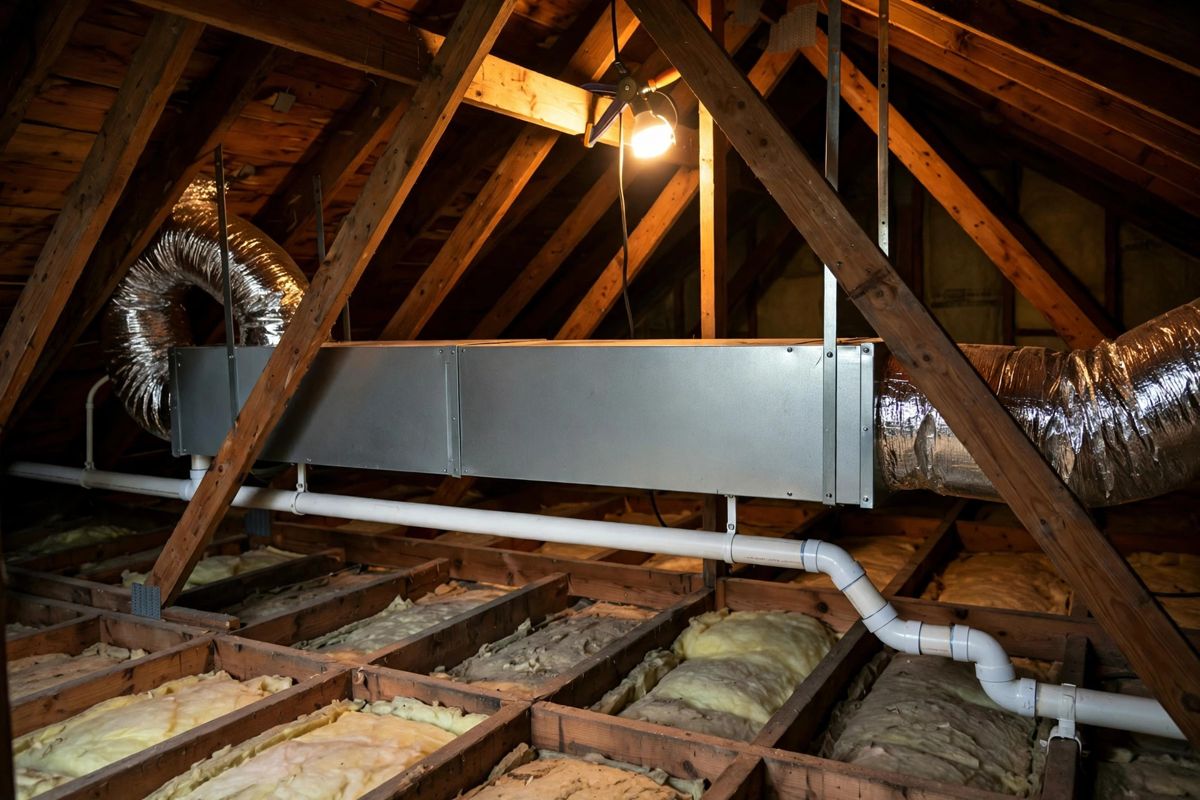
Mustiness is the most common vent smell in Cibolo, usually a water problem. Condensation collects on the cold indoor coil, drains into a pan, and should leave through the drain line. When the pan holds water or the coil grows grime and biofilm, the air picks up that damp, stale note.
Check the simple end yourself: replace a loaded filter, and look for water standing near the indoor unit. A slow or clogged drain often announces itself the same week — the pattern behind most water leak calls.
If the smell survives a fresh filter and the drain runs clear, the coil itself likely needs a proper cleaning. That is pro work: coils are delicate, and bending the fins trades a smell problem for an airflow problem.
Can you spray anything into the vents to fix mustiness?
Skip sprays and scented products: they mask the smell for a day and do nothing about the standing water or biofilm causing it. Fix the moisture source and the odor leaves with it.
Is a musty smell a health emergency?
For most households it is a maintenance problem, not an emergency — but do not ignore it for a season. Clear the drain and filter first, and if anyone at home has breathing difficulties that worsen with the system running, raise it when you call.
Burning dust: normal once, not all season
The first time the heat runs after months idle — a cold snap in November, say — dust that settled on the heating elements or heat strips burns off in minutes. The smell is sharp, dusty, and should fade within the first run or two.
That short version is normal. What is not normal is the same smell returning on cooling days, lasting hours, or getting stronger each time the system starts.
A persistent burning-dust smell in cooling season can mean an overheating motor or debris. If it keeps coming back, get it looked at — motors rarely improve with time.
Electrical burning: stop, switch off, call
Learn this one: a smell like hot plastic, scorched wiring or an electrical fire is the stop signal. Switch off at the thermostat, and if the smell is strong, at the breaker too. Do not restart it to 'see if it happens again'.
Overheating wires, a failing motor winding, or a capacitor letting go can all produce that smell, and each can move from smelly to dangerous. This is the one odor in this guide with no watch-and-wait option.
Call it in as an urgent fault — the kind emergency cooling help is for — and tell the pro when the smell appeared and what the system was doing. That detail speeds diagnosis.
Sweet or chemical: leave refrigerant to pros
A sweet, chemical smell near the indoor unit can be associated with refrigerant or other fluids. Do not chase it yourself: refrigerant work legally requires an EPA 608 certified technician, with recovery equipment and leak detection tools.
Do not open panels, do not buy a recharge can, and do not ask anyone unlicensed to top the system off. A system low on refrigerant has a leak, and adding charge without finding it buys a few weeks at most.
Ventilate the room if the smell is strong, keep the system off if cooling has dropped, and get a diagnosis. The matched pro can pressure-test, locate the leak, and tell you whether repair makes sense.
Rotten or sewer-like: check drains and pests
A rotten, sewer-like smell usually comes from one of two unglamorous sources. The first is the drain system — a dry trap or a drain line carrying a summer of slime can let sewer-like odors ride the airflow into the house.
The second is pests: a small animal dead in a duct run or the outdoor unit is a grimly common cause in Texas, and no filter change will fix it.
Start with the drain: confirm it is clear and draining. If the smell is strong, localised, and arrived suddenly, a pro visit is the practical route — ducts and cabinets are not places to go fishing without a plan.
How do you tell a drain smell from a dead pest?
Drain odors tend to be musty-sour, worst just after start-up and easing as the system runs. A pest smell is heavier, stronger near one vent or the outdoor unit, and worsens over days. If a drain check does not clear it, call it in.
Can a dirty filter cause a rotten smell?
A filter loaded with damp dust can add a sour layer, and swapping it is always step one. But a true rotten smell surviving a fresh filter points at the drain, the ducts, or something in them.
What should you check yourself, and what never?
Your safe list is short and useful: the filter, the thermostat, the visible drain outlet, standing water near the indoor unit, and the breaker panel — looking only, no fingers inside anything.
The never list matters more. Never open the unit's electrical cabinet, never handle refrigerant lines that are frosted or hissing, never bypass a safety switch because the system 'ran fine when you held it', and never ignore an electrical smell overnight.
When the smell needs a pro, knowing typical local repair cost ranges beforehand keeps things calm. BreezeCrew connects you with an independent local pro who handles diagnosis and work in person.
More from the blog
Cibolo Summer AC Guide
One Cibolo air conditioner has to survive about 122 days a year at 90°F or…
Read the guide →Signs Your AC Is About to Fail
Air conditioners in Cibolo rarely die without warning. Weeks before the final failure, most systems…
Read the guide →New Home AC Checklist
Moving into a new Cibolo home in Steele Creek, Turning Stone, Legendary Trails or a…
Read the guide →Questions homeowners ask
Why does the musty smell get worse when the AC first starts?
While the system sits idle, moist air settles in the ducts and around the damp coil, and odor builds up in that still air. The first minutes push that concentrated air into the rooms, which is why the smell hits hardest at start-up, then fades. A smell that never fades points to an active moisture problem.
The burning smell only happens when the heat runs. Should I worry?
A dusty burning smell on the first heat run of the season, fading within an hour, is the normal burn-off of settled dust and is not a fault. Worry if it happens on cooling days, returns every heat run all winter, or comes with any hint of hot plastic or wiring — that combination belongs in the switch-off-and-call category.
Can an AC smell mean the system is leaking refrigerant?
It can be one clue, especially a sweet or chemical note paired with cooling that is slipping, longer run times, or ice on the lines. Smell alone never confirms it — a pro confirms with gauges and detectors. Note the pairing of smell plus weak cooling and report both when you call.
How fast should I act on an electrical smell?
Immediately. Switch the system off, leave it off, and make the call the same day — this is the one smell where waiting for the weekend is the wrong answer. Until a pro has looked, treat the system as out of service. A hot house for an evening is an inconvenience; an electrical fault left running is a risk.
Will a tune-up prevent most vent smells?
It prevents the common ones: a seasonal visit that cleans the coil area, clears the drain line, and checks electrical parts removes the moisture and biofilm behind most musty and burning smells. It cannot stop a pest in a duct or a part failing mid-season, but it clears the background causes that make most Cibolo systems smell by August.
Related pages
Need a Cibolo AC pro?
Smell something electrical, sweet or rotten that a filter change did not fix? Call BreezeCrew on (830) 555-0147 — switch off if it is electrical — and get matched with a local pro.
Call (830) 555-0147