
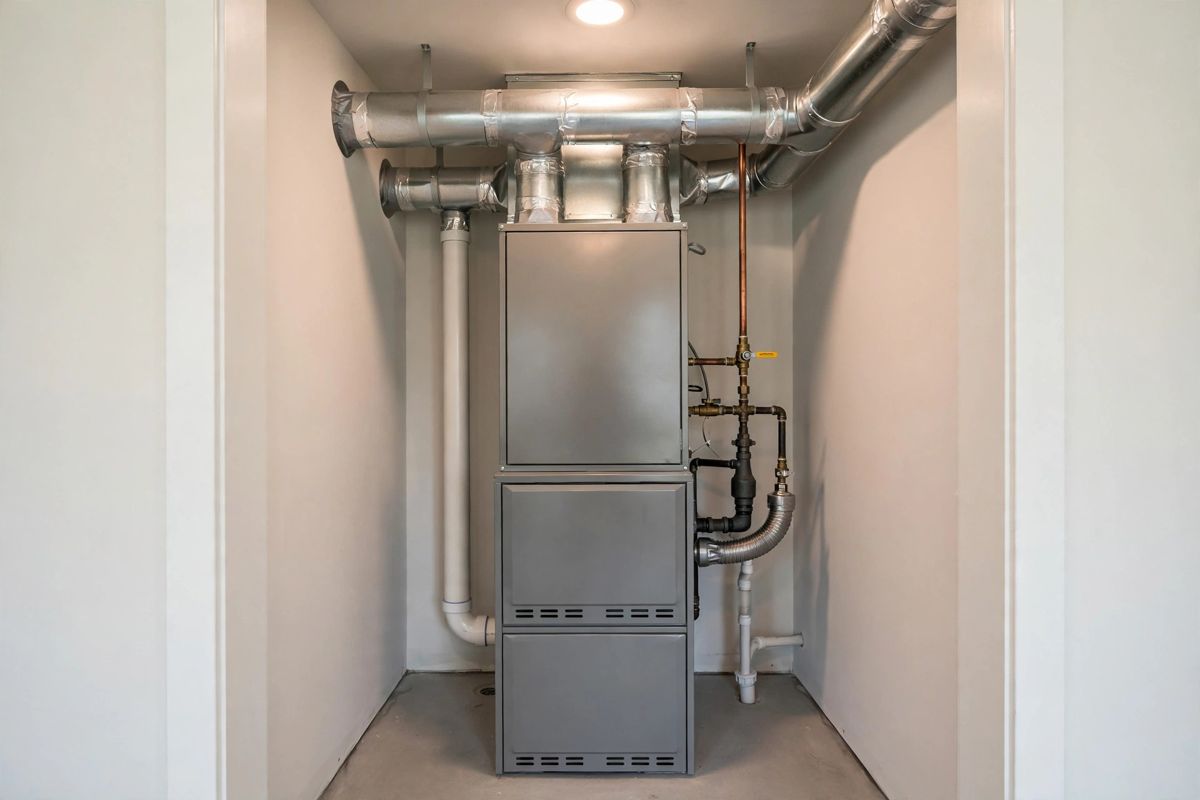
Why Cibolo furnaces fail on the coldest night
A Cibolo furnace may sit idle from March to November, then get asked for its hardest work of the year in a single weekend. Parts that were marginal in spring — a weak igniter, a tired blower, a cracked heat-sensor reading — fail under that first real load.
The climate numbers explain the pattern: only about 1,438 heating degree days a year, against more than double that for cooling. Heating faults simply get fewer chances to show themselves early.
Roughly 14 nights a year fall to 32°F or below. A furnace problem is rarely an emergency in October — and almost always feels like one on those 14 nights.
February 2021 is still the reference point
Every Cibolo homeowner who lived through the February 2021 freeze — Uri — remembers what failed heat actually costs: burst pipes, nights in a cold house, and repair queues that stretched for weeks.
Uri is the honest benchmark for heating decisions here. A system does not need to survive a month of winter. It needs to survive the worst week Texas can produce, because that week is when every weak system in the county calls for help at once.
If your furnace struggled during that freeze and has only been patched since, a pre-winter check is inexpensive insurance. The AC tune-up page covers the cooling side; ask about a heating check in the same call.
Common furnace faults, in plain terms
Most no-heat calls trace to a short list. Igniters crack and stop lighting the burners. Flame sensors coat over and shut the system down seconds after it starts. Blower motors wear out, leaving burners that light but move no warm air.
Thermostat and control-board faults make up much of the rest — frustrating, because the furnace itself is fine and only its instructions are broken.
Short, repeated starts are a warning sign worth reporting exactly as you hear them. If the system lights, runs a minute, and stops, say so when you call; that detail points the pro you're matched with straight at the likely parts. More fault patterns are covered under HVAC services.
My furnace blows cold air. What does that usually mean?
Common causes are a failed igniter, a tripped safety switch, or a blower running without the burners lit. Turn the thermostat to heat and check the fan is set to auto, not on. If the air stays cold after a full cycle, it needs a diagnosis rather than more waiting.
Is a furnace that keeps restarting dangerous?
Short cycling is the furnace protecting itself — a safety switch is cutting it off, often for overheating from poor airflow. It is not a condition to ignore or override. Check the filter first; if the pattern continues, book a visit and describe the cycle timing when you call.
Gas furnace safety, stated plainly
Gas furnaces burn fuel inside your home, so a proper repair visit includes checks a parts-swap does not: the heat exchanger is inspected, the flame is observed, and safety switches are tested rather than bypassed.
A pro should never leave a safety switch jumpered or a fault code cleared without finding its cause. If a quote sounds cheap because the safety conversation is missing, that is a reason to ask more questions, not fewer.
Working carbon monoxide alarms on each floor are a household responsibility worth handling today, furnace or no furnace. If an alarm sounds or anyone feels dizzy or nauseous with the heat running, leave the house and call emergency services first — the repair call comes second.
Heat-pump auxiliary heat: the other Cibolo heater
A growing share of newer Cibolo homes heat with a heat pump, and on the coldest nights those systems lean on auxiliary electric heat strips. Aux heat is expensive to run and easy to overlook — many owners discover it only from a shocking power bill.
Faults here look different from furnace faults: a heat pump that cannot keep up below 40°F, strips that never switch off, or a defrost cycle that leaves the house cooling instead of heating.
Those problems belong with heat pump repair, where reversing valves, defrost boards, and aux-heat staging are the daily work. Mention your system type when you call so the match is right.
What furnace repair costs around Cibolo
Heating repairs follow the same honest structure as cooling work. Common jobs in this market run $150–$650, with overall repairs spanning about $135–$1,100 for larger parts.
Diagnostic fees vary: some companies advertise dispatch as low as $25, while $75–$150 is the common full-diagnostic range. You approve a written repair range after diagnosis, before work starts.
The AC repair cost page explains how diagnostic fees and repair ranges fit together across systems — the same logic applies on the heating side.
| Job | Typical range | Notes |
|---|---|---|
| Diagnostic visit | $75–$150 | Common full-diagnostic range in this market |
| Common furnace repairs | $150–$650 | Igniters, sensors, and controls sit in this band |
| Blower motor repair | $300–$700 | Burners lit but no warm air moving |
| Larger heating repairs | $650–$1,100 | Major components on older systems |
My heater is old. Is repair still worth it?
Often, yes, for igniters, sensors, and blower work — these are wear parts, not signs the whole furnace is finished. The case weakens when the heat exchanger is cracked or repairs stack up season after season. The pro should give you both numbers: the repair range and what replacement would cost.
When should I book a heating check?
Autumn, before the first freeze, is the calm window. Pros have open schedules, parts are in stock, and a weak igniter found in October is a small job. The same fault found during a January freeze competes with every other cold house in Cibolo.
How heating help is matched here
BreezeCrew is a referral service: it connects Cibolo homeowners with independent local pros, and the pro you're matched with does the diagnosis and the repair.
When you call, say whether you have a gas furnace or a heat pump, what the system does when it tries to start, and whether any error code or unusual smell is present. That routes you to the right kind of pro the first time.
If cold weather is already here and the house is losing heat, treat it promptly — and check on elderly neighbours during a freeze, especially in communities like Scenic Hills. For the wider service list, see the service area page.
Questions homeowners ask
How fast can a furnace be repaired during a Cibolo cold snap?
It depends on the fault and on demand — during a freeze, every heating pro in the area is busy at once. Common parts like igniters and flame sensors are usually carried on the truck, so many repairs finish on the first visit. Call early in the day, describe the symptoms precisely, and keep the house as warm as you can safely manage while you wait.
My furnace runs but the house never warms up. Why?
Likely causes include a failing blower moving too little air, a clogged filter strangling airflow, burners that light inconsistently, or duct leaks sending heated air into the attic. Each has a different fix and price, which is why diagnosis comes before quoting. Note whether some rooms warm and others do not — that pattern helps the pro narrow it down on arrival.
Should I repair a 15-year-old furnace or replace it?
Wear-part repairs — igniters, sensors, blowers in the $150–$700 range — usually make sense even on older furnaces. A cracked heat exchanger ends the conversation: that is a replacement, on safety grounds. Stack the last two winters of repair bills against a replacement range of $5,000–$12,000+ for a full system, and ask the pro to price both paths in writing.
Why does my power bill spike when my heat pump runs in winter?
Auxiliary electric heat. When temperatures drop, heat pumps call on electric heat strips that cost far more to run than the pump itself. Strips that engage too early or never switch off — from a thermostat setting, a sensor fault, or a struggling outdoor unit — are a repair issue, not a fact of life. A heat-pump pro can check the staging and the defrost cycle.
What should I check before calling for furnace repair?
Confirm the thermostat is set to heat and above room temperature, the filter is not clogged, the furnace switch and breaker are on, and the gas supply valve is open. Note any error code blinking on the control board and whether the system lights at all. Those few details, given on the call, save diagnostic time and help match you with the right pro.
Related pages
Need a Cibolo AC pro?
Cold house, short patience? Call (830) 555-0147, say whether you run a gas furnace or a heat pump, and get matched with a local pro who will diagnose it and quote a written range before any repair starts.
Call (830) 555-0147