
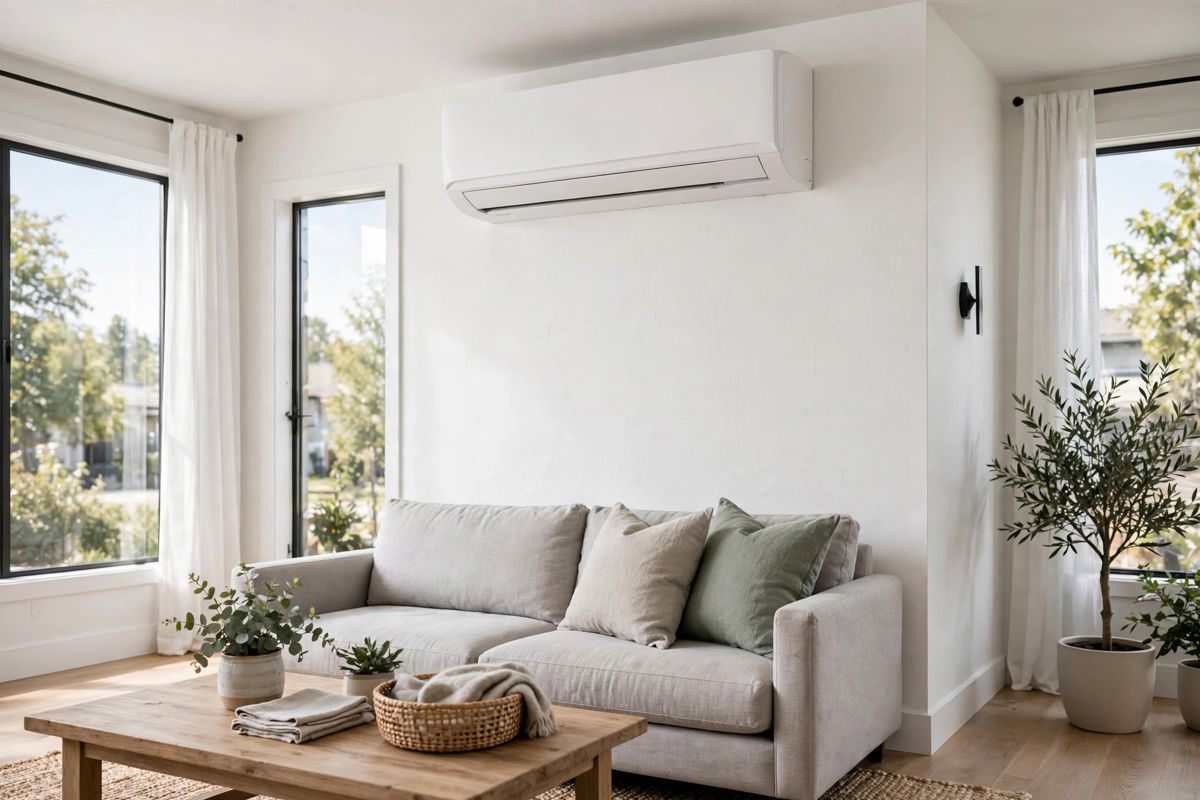
Where mini-splits work in Cibolo homes
Ductless systems earn their keep in the spaces central air reaches badly. In Cibolo that usually means a garage workshop that needs summer relief, a home addition built without ductwork, or a casita housing family.
Two-story bonus rooms are the other classic case. They sit over hot garages, bake under the roof, and stay warm long after the main system satisfies the downstairs thermostat.
These are exactly the rooms where a mini-split shines — and where its failure is felt immediately, because there is no second system backing it up. If the main house has the same hot-room problem, the second floor too hot page covers the central-air side of it.
Error codes: what they can and cannot tell you
Ductless systems report faults as codes on the indoor unit or remote. A code narrows the search — a sensor, a communication failure between indoor and outdoor units, a drainage problem — but it rarely names the exact part.
Write the code down exactly as displayed, and note whether it appeared suddenly or after a storm, a power flicker, or a filter cleaning. That history is genuinely useful diagnostic information.
Do not keep resetting the unit to clear a repeating code. A fault that returns after a reset is the system protecting itself, and repeated restarts can turn a sensor problem into a board problem. More on how these systems differ from central air is on the HVAC system types page.
Can I clear an error code by turning the unit off and on?
A single reset after checking the filter and the outdoor unit is reasonable. If the code returns, stop resetting it. Recurring codes point at sensors, boards, or refrigerant problems that a pro should read with proper tools — and the pattern of when it returns helps the diagnosis.
Why does one zone cool and the other does not?
In multi-zone systems, each indoor head has its own valve and sensor. One weak head with others working points to that head's valve, sensor, or charge distribution — not the whole system. Tell the pro which rooms are affected; that detail separates a head fault from a system fault before the visit.
Weak cooling and airflow problems
A mini-split that runs but barely cools usually has one of four problems: a clogged filter or blower wheel, a dirty indoor coil, low refrigerant from a flare-fitting leak, or an outdoor unit choked with dust and grass clippings.
Owners can handle the first one. Mini-split filters clog faster than most people expect, and the barrel-shaped blower wheel collects a film that quietly strangles airflow over a season or two.
Low charge is a pro job, and flare connections are the usual leak point on ductless systems. Refrigerant work requires an EPA 608 certified technician. If the symptoms match the main system too, the AC not cooling ladder is worth a read.
Water leaks from ductless units
A mini-split dripping down the wall is one of the most common ductless calls in Cibolo. The indoor head produces condensate all summer, and its small drain line clogs with algae and dust far more easily than a central system's drain.
Left alone, the water finds the wall, the paint, and eventually the flooring. A unit that drips only on the most humid days is giving early warning — that is the moment to book, not the moment to put a towel down and forget it.
Pros clear the line, check the pump on pumped-drain setups, and confirm the head is level. The wider water story, including central systems, is on the AC leaking water page.
What mini-split repair costs around Cibolo
Ductless repairs sit in the same broad market as central AC work: common jobs run $150–$650, diagnostics follow the usual pattern — some companies advertise dispatch as low as $25, while $75–$150 is the common full-diagnostic range.
Control boards and indoor blower assemblies vary more by brand than central-AC parts do, which is why a written range after diagnosis matters. Give the brand and model when you call; it helps the pro check parts availability before arriving.
For comparison against central-system pricing, see the AC repair cost page.
| Job | Typical range | Notes |
|---|---|---|
| Diagnostic visit | $75–$150 | Common full-diagnostic range in this market |
| Common ductless repairs | $150–$650 | Sensors, drains, and blower work sit in this band |
| Refrigerant recharge | $200–$600 | After the flare-fitting leak is found and sealed |
| Coil repair or replacement | $900–$2,500 | Indoor or outdoor coil, depending on the fault |
Not every AC pro services ductless
This is the honest catch with mini-splits: they are a specialism. Many Cibolo pros focus on central systems and rarely open a ductless head, which have different boards, different diagnostics, and brand-specific parts.
BreezeCrew is a referral service, and for ductless work the match is the point. You describe the system and the code, and the call goes to an independent local pro who services mini-splits regularly.
Ask on the call whether the pro stocks parts for your brand. A straight answer either way saves a wasted visit. The full service list is under HVAC services.
Experience shows in small ways: a ductless pro carries spare sensors and drain parts, knows each brand's code list, and checks flare connections before condemning a compressor. Those habits are what save you a second visit.
It also shows in what the pro does not do — topping off refrigerant without a leak check, or pushing a new head when a deep clean would restore the old one. Straight answers on those judgement calls are the real test.
How often does a mini-split need professional cleaning?
Filters are an owner job, every few weeks in heavy summer use. The deeper clean — blower wheel and coil inside the head — is worth booking when airflow drops, a musty smell appears at start-up, or the unit has run two or more Cibolo summers without one. It restores airflow that no filter change can.
Is a leaking mini-split an emergency?
Not usually a same-hour emergency, but do not let it run and drip. Switch the unit off to stop condensate forming, protect the wall and floor, and book promptly. Water damage grows quietly, and a drain cleared this week is far cheaper than drywall repair next month.
Questions homeowners ask
Why is my mini-split flashing a code and refusing to run?
The system has detected a fault it will not run through — commonly a temperature sensor, a communication failure between the indoor head and outdoor unit, or a drainage fault. Write the code down exactly, check the filter is clean, and try one reset. If it returns, that is the system protecting its electronics, and a ductless pro should read the fault properly rather than guess at parts.
Can a mini-split be repaired, or do they just get replaced?
Most mini-split faults are repairable: sensors, drain problems, blower assemblies, boards, and flare-fitting leaks are all standard work for a ductless pro. Replacement enters the picture when a compressor fails on an older unit or parts for an obscure brand are no longer available. Age, parts availability, and the repair quote against a new head or system settle it — ask for both numbers in writing.
Why does my ductless unit smell musty when it starts?
Moisture sits on the indoor coil and blower wheel between runs, and in Cibolo humidity that grows a film that smells at start-up. A dirty filter makes it worse. Regular filter cleaning helps; a persistent smell after that means the head needs a proper internal clean by a pro. Chemical sprays into the unit are not a substitute and can coat the coil further.
My garage mini-split cannot keep up on 100°F days. Is it broken?
Maybe not. Garages are lightly insulated, lose cool air every time the door opens, and gain heat through the door itself — a brutal load on the hottest afternoons. If the unit cooled the space well in previous summers and has slipped, suspect airflow or charge. If it never quite managed, the unit may be undersized for the space, which is a sizing conversation, not a repair.
What information should I have ready when I call about a mini-split?
The brand and model if you can find them, the exact error code, which zones or rooms are affected, and when the problem started. Mention whether the unit still runs, drips, or has shut down completely. Those details route the call to a pro who services that brand and arrive-ready for the likely fault, which shortens the whole visit.
Related pages
Need a Cibolo AC pro?
Ductless unit down, flashing, or dripping? Call (830) 555-0147 with the brand and error code handy, and get matched with a local pro who actually services mini-splits — written range before work starts.
Call (830) 555-0147